Great Shipping Rates
Discreet & Secure Packaging
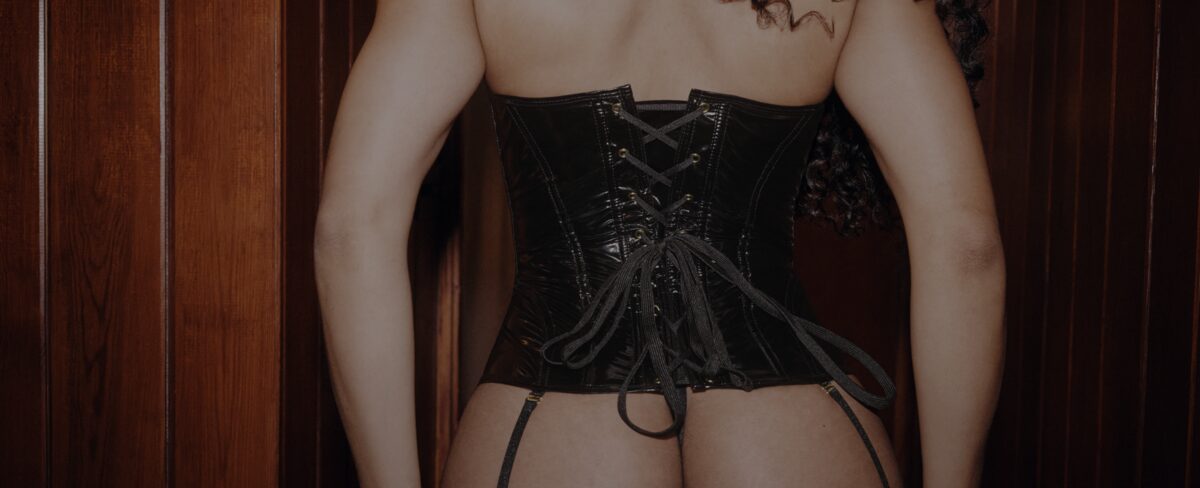
The Complete Guide to Wearing a Corset: Fit, Style and Care Advice
Corsets are back — and they never really left. From the bedroom to the high street, the corset has become one of the most versatile pieces in a woman's wardrobe: a confidence-boosting lingerie staple one evening, a statement outerwear piece the next. Putting on a corset takes a little know-how but we’ve got you!
This guide covers everything you need: how to choose the right type, measure for the perfect fit, put it on correctly, style it (both as lingerie and as outerwear), and keep it looking its best for years to come.
Quick answer: To wear a corset, loosen the laces fully, fasten the front busk from the middle outward, then tighten by pulling the loops at the waist of the corset. Pull down to secure the top and to secure the bottom, then pull together to cinch in the waist. It should feel snug but never painful.
Corset Types: Know What You're Buying
Not all corsets are the same, and choosing the right type from the start makes everything easier. The two main decisions are coverage (overbust vs underbust) and construction (soft-boned fashion corset vs corset top styles).
| Type | Coverage | Best For | Boning |
|---|---|---|---|
| Overbust | Bust to hip | Lingerie, costuming, full silhouette | Steel or soft |
| Underbust | Below bust to hip | Outerwear layering, everyday wear | Steel or soft |
| Soft-boned fashion corset | Varies | Occasional wear, outerwear styling | Plastic/light |
Overbust vs Underbust: Which Should You Choose?
Overbust corsets cover the bust and extend to the hip, offering a complete silhouette. They work beautifully as standalone lingerie pieces and make a dramatic outerwear statement. The trade-off: sizing is more complex because you need both your waist and bust to align.
Underbust corsets sit below the bust and are significantly easier to size and style. They pair effortlessly with bras, crop tops, or nothing at all underneath, making them the more versatile option for outerwear looks. If you're buying your first corset, an underbust is the more forgiving starting point.
Fashion Corsets Tops vs Structured Corsets
Fashion corsets tops use lighter boning of sewn seems and are designed for occasional wear and styling. They give shape without heavy compression and are ideal for outerwear looks.
Structured soft boned corsets use firmer boning to provide more defined shaping and support. They're the better choice for lingerie wear or anyone who wants a more pronounced silhouette, style with your outfit or layering with a shirt or top.
How to Find Your Corset Size
Ann Summers corsets are sized by UK dress size, not by waist inches — so finding your size is straightforward. Use your usual dress size as the starting point, then cross-reference your bra band size to confirm the fit, particularly for overbust styles where the bust measurement matters most.
Tip: If you're between sizes, size up. A corset you can lace a little looser will always be more comfortable than one that's too small to close properly.
Ann Summers Corset Size Guide
| Size | UK Dress Size |
|---|---|
| XS | 4–6 |
| S | 8–10 |
| M | 12–14 |
| L | 16–18 |
| XL | 20–22 |
| XXL | 24–26 |
What if I'm Between Sizes?
Always size up. A corset that's slightly larger can be laced to your exact fit; one that's too small puts unnecessary strain on the fastenings and won't sit correctly on the body. If your dress size and bra band size point to different sizes, go with the larger of the two.
A Note on Overbust Styles
For overbust corsets, your bra cup and band size matter as much as your dress size. Check both columns in the guide above before ordering. If your cup size sits at the top of a size range (for example, a DD cup at size M), consider sizing up to ensure the bust panel sits comfortably without gaping or pulling.
How to Put On a Corset Correctly
Putting on a corset correctly protects both the garment and your comfort. The key rule: always loosen the laces fully before you start. Trying to step into a half-laced corset is the most common mistake and the fastest way to damage the busk or distort the boning.
Follow these steps every time:
- Loosen the laces completely so there is a gap of at least 4-6 inches at the back.
- Wrap the corset around your body with the busk (the front fastening) centred on your sternum.
- Fasten the busk from the middle outward — start with the middle loops and pins, then work up and down. Never force a busk closed by pulling; it should close with gentle pressure only.
- Check the positioning — the waist tape or the narrowest point of the corset should sit at your natural waist, not your hips.
- Tighten the laces from the centre — pull the loops at the natural waist first, then work upward and downward from there, creating an even tension throughout.
- Tie off the loops at the waist with a bow; tuck the loose lace ends up under the bottom edge of the corset to keep them neat.
Important: The lacing gap at the back should close evenly from top to bottom. If it's wider at the top or bottom, adjust the tension in those areas before tying off.
How Tight Should a Corset Be?
A well-fitted corset should feel firmly supportive — like a confident hug around your waist. You should be able to breathe comfortably and move without pain. If you feel any pinching, shortness of breath, or sharp pressure on your ribs or hips, loosen the laces immediately. Tightness that causes discomfort beyond initial adjustment is a sign the corset is either too small or not yet properly seasoned.
Signs Your Corset Fits Correctly
Good signs:- The lacing gap is even from top to bottom
- The busk lies flat against your sternum without gaping
- The waist tape sits at your natural waist
- You can breathe normally and move without restriction
- The busk bows outward (corset is too small or too tight)
- The top or bottom flares away from your body (wrong torso length)
- Persistent pain or numbness anywhere (stop wearing immediately)
- The lacing gap is wider than 3 inches even at full tightness (corset is too large)
Note: Some initial discomfort is normal as your body adjusts to the structure. Discomfort that persists after loosening, or any sharp pain, is not normal and means you should remove the corset and reassess the fit.
Wearing a Corset as Lingerie
A corset as lingerie is one of the most powerful confidence pieces you can own. It creates a defined silhouette, offers a sense of structure and support, and — worn well — feels as good as it looks. The key is pairing it thoughtfully and wearing it comfortably.
What to Wear Underneath
We don’t recommend wearing anything underneath your Ann Summer corset, like a liner or camisole. They are designed to be worn against the skin and the softer boning means no chaffing.
Lingerie Pairings That Work
- Suspender belt and stockings — the classic combination. An underbust corset pairs particularly well here, leaving the suspender belt free to sit on the hips.
- High-waisted knickers — creates a sleek, polished silhouette under the corset hem. Avoid thongs if you plan to sit, as the corset hem can dig in.
- Matching bra (for underbust styles) — choose a bra with a similar aesthetic: lace, satin, or mesh. A plain T-shirt bra under an ornate corset breaks the look.
- Bodystocking — worn underneath a corset, a sheer bodystocking adds texture and warmth without bulk.
Wearing a Corset as Outerwear
Corsets as outerwear are no longer the preserve of costume parties. Worn over a shirt, layered under a blazer, or styled with tailored trousers, a corset is one of the most versatile statement pieces in a contemporary wardrobe. The trick is in the fabric choice and what you pair it with.
What to Wear With a Corset
Bottoms:- High-waisted wide-leg trousers — the structured waist of the corset and the volume of wide-leg trousers balance each other perfectly
- Midi or maxi skirts — a satin corset over a floaty skirt is one of the strongest evening looks going
- Straight-leg or tailored jeans — keeps the look grounded and wearable for daytime
- An oversized blazer worn open over a corset adds polish without hiding it
- A crisp white shirt underneath an underbust corset is a sharp, fashion-forward combination
- Straight-leg or tailored jeans — keeps the look grounded and wearable for daytime
Occasion Guide
- Evening out: Satin or brocade overbust, paired with a midi skirt or tailored trousers
- Festival: Faux leather underbust over a graphic tee, with denim shorts
- Smart casual: Brocade or cotton underbust over a fitted shirt, with straight-leg trousers
- Date night: Lace overbust as a top, with high-waisted wide-leg trousers and heels
Corset Care and Storage
A well-made corset, properly cared for, will last for years. The rules are straightforward but non-negotiable: never machine wash, never tumble dry, and never store it rolled up in a drawer.
Storage- Never roll a corset — this stresses the boning channels and can permanently distort the shape
- Store flat in a cool, dry place, ideally in an acid-free box or a cotton pillowcase
- Do not wear the same corset two days in a row — allow at least 24 hours for the fabric and boning to recover their shape
- Keep away from direct sunlight, which fades fabric over time
Common Corset Mistakes to Avoid
Most corset problems come down to a handful of avoidable errors. Here are the ones that come up most often:
- Lacing too tight too soon. The most common mistake with a new corset. The boning needs time to mould to your shape; forcing it closed immediately risks damaged stitching and a corset that never fits comfortably.
- Storing it rolled up. Rolling a corset puts lateral stress on the steel bones, which can cause them to bend permanently out of shape. Store flat or hanging only.
- Fastening the busk from the top. The busk should always be fastened from the middle outward (up and then down). Starting at the top creates uneven tension and makes the bottom clasps much harder to close.
- Washing it in the machine. Water and agitation can damage the boning and destroy the structure. Hand wash only, every time.
Corset FAQs
How tight should a corset be?
A corset should feel firmly supportive without causing pain or restricting your breathing. When properly fitted and laced, you should be able to take a full breath and move comfortably. A good rule of thumb: if you have to hold your breath to close it, it's too tight or not yet properly seasoned.
What size corset should I buy?
Ann Summers corsets are sized by UK dress size, while others are dual bra sized. so start with your usual size. For overbust styles, also check your bra band and cup size against the size guide, as the bust fit matters too. If you're between sizes or your dress size and bra size point in different directions, always go with the larger size.
How long does it take to break in a corset
Most corsets take 1-2 weeks of gradual wear to fully season. Start with 1-2 hours per day at a loose lace and increase both the wear time and the cinch slowly over the first fortnight. After two weeks, the corset should feel noticeably more comfortable and moulded to your shape.
Can you sleep in a corset
It is not recommended. Sleeping in a corset prevents your body from fully relaxing and puts prolonged, uneven pressure on your torso. It also accelerates wear on the corset itself. For comfort and longevity, remove your corset before bed and allow both your body and the garment to rest overnight.
Can I weat a corset every day?
You can wear a corset regularly, but the same corset should not be worn two days in a row. The boning and fabric both need time to recover their shape between wears. If you want to wear a corset daily, invest in two and alternate them.
Ready to Find Your Perfect Corset?
Now you know how to choose it, wear it, style it and look after it, the only thing left is finding the one. Browse the Ann Summers corset collection to find styles across satin, lace, brocade and faux leather — from classic underbust shapes to full overbust statement pieces, in sizes to suit every body.
-
The Bra Fitting Guide
Find your perfect fit with our complete bra fitting guide. Our step-by-step expert advice will leave you feeling more confident and sexier than ever.
-
A Guide to Different Knicker Styles
Find your perfect knicker fit with help from the Ann Summers lingerie experts. Bumless or brief? String or shorts? We'll help you choose...
-
Lingerie Care | How to Wash Bras & Underwear
Take care of your underwear drawer contents with these top tips from Ann Summers. From washing and drying, to storage tips, read now.
Sign up for Emails
Get 20% off your first order.
Plus the latest launches, offers and exclusives!
*20% Discount only available on full price products and 5% off discounted products.
By inputting your information, you agree that we can use it in accordance with our Privacy Policy. You are able to unsubscribe from marketing at any time. By proceeding you agree to our Terms and Conditions.
You must be over 18 to join our mailing list.

Sign up to emails and get up to 20% off your first order
Stay in the loop with our latest launches, offers and exclusives!
*20% Discount only available on full price products and 5% off discounted products
By inputting your information, you agree that we can use it in accordance with our Privacy Policy. You are able to unsubscribe from marketing at any time. By proceeding you agree to our Terms and Conditions.
You must be over 18 to join our mailing list.
Our Benefits
Free Delivery over £50
Spend £50 or more and enjoy free UK Standard Delivery (arrives in 3 working days).
Prefer something faster or more flexible? Next Day, Click & Collect & more at checkout.
Buy Now, Pay Later
Buy Now & Pay Later with our payment partners Klarna, Paypal, and Clearpay at checkout. Get the product you want, when you want it.
Free Returns
Changed your mind? Return eligible items free of charge within 28 days.
Discreet Delivery
Your order will always arrive in plain, unbranded packaging from “AS Ltd”.
Remove Product?
Are you sure you want to remove:
?