Great Shipping Rates
Discreet & Secure Packaging

Roleplay and Fantasy Ideas: Your Complete Guide to Spicing Things Up
Roleplay is one of the most versatile tools in any couple's arsenal. It can reignite a long-term relationship, help you explore a fantasy you've always been curious about, or simply make a Tuesday night feel like something worth remembering.
Yet for many people, the idea of roleplay sits in the "sounds amazing in theory" category. The reality of suggesting it to a partner, figuring out where to start, or actually staying in character can feel daunting. This guide is here to change that.
What you'll find here: a clear explanation of what roleplay actually is, how to bring it up with a partner, 20+ scenario ideas across every style and comfort level, tips on costumes and props, and guidance on making every experience feel safe and satisfying.
Whether you're a complete beginner or looking for fresh inspiration, the only rule is that there are no rules, except that everyone involved is enthusiastically on board.
What is roleplay?
Sexual roleplay is when two or more consenting partners take on characters or personas to act out an erotic scenario together. The characters can be anything from a delivery driver who arrives at just the right moment, to a pirate captain and their captive, to a version of yourselves meeting for the very first time.
The key word is consensual. Great roleplay is built on agreement, communication, and the freedom for either person to step out of the fiction whenever they want. The arousal comes from the narrative and the dynamic, not just the physical acts.
Roleplay works because it gives you permission. Stepping into a character lets you explore desires, power dynamics, or levels of confidence that might feel harder to access as your everyday self. Research in sexual psychology consistently shows that novelty is one of the most powerful drivers of desire, and roleplay delivers novelty even within a long-term relationship.
Scenarios can be:
- Light and playful (a cheeky text exchange as strangers, no costumes required)
- Immersive and sensory (full costume, a set location, a scripted opening line)
- Power-led (boss and employee, officer and civilian, dominant and submissive)
- Fantasy-based (historical, mythological, supernatural)
How to Bring Up Roleplay With Your Partner
The conversation before the roleplay is just as important as the roleplay itself. Bringing it up doesn't have to be awkward; it just requires a little confidence and the right moment.
Start Outside the Bedroom
The best time to discuss new ideas is when you're both relaxed and not mid-intimacy. A low-pressure moment, over dinner, on a walk, or curled up on the sofa, makes it much easier to be honest about what appeals to you and what doesn't.
Try something like: "I've been thinking about trying something a bit different. Would you be up for exploring some roleplay ideas together?"
Use a Fantasy Wishlist
One technique that works brilliantly is the fantasy wishlist. Each of you writes down three to five scenarios you'd be open to trying. You swap lists, circle anything that appeals to both of you, and go from there. It removes the vulnerability of having to say something out loud first, and often reveals shared interests you didn't know you had.
Be Specific About What Excites You
Vague suggestions can be hard to respond to. Instead of "I want to try roleplay", try: "I love the idea of us pretending to be strangers meeting in a bar. Would that be something you'd enjoy?" Specificity makes it easier for your partner to say yes, or to suggest a variation they'd prefer.
What to Cover Before You Start
Once you've agreed on a scenario, a quick check-in covers the essentials:
| Topic | Why It Matters |
|---|---|
| The scenario and characters | So you both know the premise and your roles |
| Any limits or boundaries | What's off the table, no judgment required |
| A safeword | A signal to pause or stop the scene immediately |
| Aftercare preferences | How you'd like to reconnect once the scene ends |
On safewords: choose a word you'd never say during ordinary sex. "Red" is the most widely used because it's unambiguous. If either person says it, the scene stops immediately, no questions asked, no awkwardness. Having one in place makes it easier to fully let go and enjoy the experience.
Classic Roleplay Scenarios to Try
These are the scenarios people come back to again and again, because they work. Each one is built on a simple, relatable premise that's easy to get into without elaborate preparation.

Strangers in the Night
It’s time to meet again for the very first time…
Arrange to meet your partner at a bar, hotel lobby, or coffee shop and act as though you've never met. Arrive separately, take different spots, and let one of you make the first move. Flirt, get to know each other, and end the evening as two people who just can't resist each other.
This scenario is especially powerful for long-term couples who feel the spark has dulled. You're not pretending to be different people; you're rediscovering each other through fresh eyes. The novelty effect is real, and it tends to be electric.
How to make it land: dress up for it. Book a table somewhere you don't usually go. Commit to the premise for at least an hour before heading home.

The Masseuse and the Client
Book an "appointment" with your partner. Dim the lights, put on something ambient, lay down towels, and warm up some massage oil. One of you plays the professional masseuse; the other is the client who needs to relax.
The masseuse works slowly from shoulders to lower back, from feet to the backs of the thighs, getting closer and closer without crossing the line. The tension is the point. Switch from massage oil to lube when the moment feels right, and let the scene take its natural course.
Tip: this scenario works beautifully with a blindfold for the client. Removing sight heightens every other sense.

The Boss and the Employee
One of the most popular power-dynamic scenarios for good reason. The setup is simple: one person holds authority, the other wants something. It can play out as seduction, as a "disciplinary meeting" that goes off-script, or as the employee deciding they're done following orders.
The beauty of this scenario is that either person can hold the power. The boss can be demanding or secretly submissive. The employee can be eager to please or completely in charge. Discuss which direction appeals before you start.

The Doctor and the Patient
A classic for anyone who enjoys the interplay of care and authority. The "doctor" takes charge, the "patient" is compliant. Props are minimal: a white shirt, a clipboard, a desk. The scenario lends itself naturally to slow, deliberate build-up with a strong power dynamic throughout.

The Officer and the Civilian
One partner plays a figure of authority (police officer, detective, security guard), the other is caught doing something they shouldn't. The "officer" has the power to let them off, or to make them work for it.
This scenario works well if you enjoy a little resistance and negotiation as part of your dynamic. Handcuffs or restraints can add a tactile element if both partners are comfortable.

Neighbours Who Finally Give In
You've both been aware of each other for months. One of you knocks on the door to borrow something. The tension that's been building finally has somewhere to go. This scenario is low-stakes, easy to improvise, and surprisingly effective because the "forbidden but plausible" framing is genuinely arousing.
Fantasy and Costume Roleplay Ideas
Sometimes the best roleplay takes you completely out of the real world. Fantasy scenarios let you inhabit characters from history, mythology, fiction, or your own imagination. A costume helps enormously here: slipping into something different physically makes it much easier to mentally step into a new persona.

Royalty and the Subject
One partner is royalty (queen, empress, goddess), the other is there to serve and please. This scenario flips everyday dynamics in a delicious way. The person who usually takes charge gets to be worshipped; the person who usually follows gets to command. It's a powerful dynamic with a lot of room for improvisation.
Costume ideas: a crown, a silk robe, jewellery. The contrast between regal and undone is half the appeal.

Pirates and Captives
A swashbuckling scenario that's been popular for centuries for good reason. One partner is the daring pirate captain; the other is their captive who may or may not be entirely unwilling. The dynamic is playful, adventurous, and allows for plenty of physical energy.
Make it work: agree on the level of "resistance" that's fun versus what crosses a line. This is one scenario where a clear safeword is especially useful.

The Vampire and the Mortal
Gothic, sensual, and charged with forbidden energy. The vampire is irresistible, the mortal is drawn in despite knowing better. This scenario lends itself to slow seduction, neck-kissing, and a strong dominant/submissive undertone without requiring elaborate props.

Time Travellers
You've arrived from different eras and found each other. Play with the fish-out-of-water dynamic: one partner is from the past, encountering the modern world (and you) for the first time. Or both of you are travellers from different times, drawn together by something neither of you can explain. It's playful, imaginative, and surprisingly easy to improvise.

The Forbidden Romance
Two people from opposing worlds who absolutely should not be together: rival families, opposing kingdoms, a forbidden affair. The scenario is built on tension, secrecy, and the heightened desire that comes from knowing something is out of bounds. Think Bridgerton energy.

Superhero and Villain
The hero has finally caught their nemesis. Or have they? The power dynamic shifts constantly in this scenario, which makes it endlessly playable. Costumes can be as elaborate or as minimal as you like: a mask is enough to set the scene.
Quick tip: fantasy scenarios work best when both partners commit to the premise rather than breaking character to laugh nervously. If it does get silly, lean into it. Laughter during sex is a sign of genuine comfort, not failure.
Digital Roleplay: Sexting, Phone Sex, and Long-Distance Ideas
Roleplay doesn't require you to be in the same room. Digital roleplay is perfect for couples who don't live together, for building anticipation when one of you is travelling, or simply for adding a layer of excitement to an ordinary weeknight.

Sexting as Strangers
Create separate personas and message each other as though you've never met. You can be completely different characters, or versions of yourselves with different names and backstories. Taking on a character removes the self-consciousness that can make sexting feel awkward, and lets you be bolder than you might be as yourself.
The wrong number twist: one of you "accidentally" messages the other. The stranger on the other end turns out to be surprisingly receptive. It's a low-pressure way to start a digital roleplay because neither person has to break the ice as themselves.
Building Tension Before You're Together
Use messaging to set the scene hours before you're in the same room. Agree on a scenario in advance, then spend the day exchanging messages in character. By the time you're actually together, the anticipation has done most of the work.
Video Call Roleplay
A video call adds a visual dimension without requiring you to be in the same place. One partner can be the "client" calling a professional of some kind; the other can be in character from the moment they answer. Costumes and lighting make a significant difference here.
Safety note: if you're sharing images or videos as part of digital roleplay, only do so with someone you completely trust. Consider using a platform with disappearing messages if privacy matters to you.
For more inspiration on making the most of distance, the Ann Summers guide to phone sex and sexting covers the practical side in detail.
Power Play and BDSM-Adjacent Roleplay
Many of the most popular roleplay scenarios have a power dynamic at their core. One person leads, the other follows. One person commands, the other complies. This is the essence of power play, and it doesn't require you to identify as kinky or experienced in BDSM to enjoy it.
Power play in roleplay exists on a spectrum. At one end: a boss who's a little too demanding, a masseuse who takes their time. At the other: explicit dominant/submissive dynamics with agreed rules, restraints, and detailed negotiation. Most people find themselves somewhere in the middle, and that's exactly where roleplay thrives.

Dominant and Submissive
One partner takes the lead for the entire encounter. The dominant partner decides the pace, the activities, and the direction. The submissive partner follows, within limits that have been agreed in advance.
This dynamic can be maintained through character (the boss, the officer, the royalty) or simply as yourselves with an agreed power shift for the evening. It's one of the most frequently cited fantasies among women, according to sexual psychology research, and it works precisely because it's a chosen surrender, not an imposed one.
Key principles for power play:
- Negotiate everything in advance: what's on the table, what isn't, and the safeword
- The submissive partner always holds the real power (they can end the scene at any time)
- Check in with each other during and after, especially for your first time
Restraint and Sensation Play
Adding physical restraint to a roleplay scenario heightens the power dynamic significantly. Restraints can be as simple as holding wrists above the head, or as deliberate as using restraint cuffs or ties. Blindfolds remove sight and amplify every other sensation.
Sensation play, using temperature (ice, warm wax), texture, or feather ticklers, adds another dimension to scenarios where one partner is in control of what the other experiences.

The Interrogation Scene
A detective or investigator has a suspect in the room. The suspect knows something; the detective intends to find it out. This scenario is built on tension, resistance, and the slow erosion of composure. It's theatrical, playful, and allows both partners to be genuinely reactive rather than following a script.
Remember: power play is consensual play. The thrill comes from trust. Anything that happens in a scene is something both people actively chose to explore together.
How to Use Costumes and Props in Roleplay
You don't need a costume to do roleplay. But wearing one changes everything.
Putting on a different outfit is one of the fastest ways to shift your mindset and fully inhabit a character. There's a psychological effect at work: when you look different, you feel different, and that makes it much easier to act differently. It's why actors talk about the power of costume, and it applies just as much in the bedroom.
Choosing Your Costume
The best roleplay costume is one that makes you feel genuinely confident, not just one that fits the scenario. A nurse's outfit that makes you feel incredible will outperform a perfectly accurate pirate costume that makes you feel self-conscious every time.
Costume ideas by scenario:
| Scenario | Costume Suggestion |
|---|---|
| Boss/Employee | Sharp blazer, heels, reading glasses |
| Doctor/Nurse | White coat or uniform, stethoscope |
| Officer/Civilian | Uniform, badge, handcuffs |
| Royalty/Subject | Silk robe, crown, statement jewellery |
| Vampire/Mortal | Dark, dramatic, minimal |
| Masquerade | Elegant dress, mask |
Browse the Ann Summers roleplay costume collection for outfits designed to make you feel as good as you look.
Props That Elevate a Scene
Props don't have to be elaborate. A few well-chosen items can transform your bedroom into a completely different space:
- Massage oil and candles for the masseuse scenario
- A blindfold for any scenario involving sensory deprivation
- Handcuffs or soft restraints for power-play scenes
- A desk or chair positioned deliberately for an office scenario
- A different room in your home to signal a location change
Setting the Scene
The environment matters more than most people realise. Changing the lighting (candles, a lamp instead of the overhead), putting on music, or even just tidying the room signals to both of you that this is different from an ordinary evening. It's a form of ritual that primes the mind for play.
Tips for First-Timers: How to Actually Stay in Character
The most common worry about roleplay isn't finding a scenario, it's the fear of feeling silly once you're actually in it. Here's what experienced players know that beginners don't.
You Don't Need to Be a Good Actor
Roleplay isn't a performance. You're not trying to convince anyone of anything. You're creating a shared fiction with someone who wants to be in it with you. The bar is "willing and present", not "convincing".
Start With a Premise, Not a Script
Over-planning kills spontaneity. Agree on the scenario and the opening line, then let it unfold naturally. "You're the masseuse, I'm the client, you've just knocked on the door" is enough to get started. Everything else emerges from there.
Breaking Character Is Fine
If you laugh, that's fine. If you need to pause and check in, that's fine. If something doesn't feel right and you want to stop, that's more than fine. Breaking character to laugh together is a sign of genuine intimacy, not a failed scene.
The difference that matters: breaking character because you're having fun versus breaking character because something isn't working. Know which one is happening and respond accordingly.
Build Complexity Over Time
Your first roleplay doesn't need to involve costumes, props, a specific location, and an elaborate backstory. Start with one element: a premise, a character name, an opening line. Add more as you get comfortable.
Most couples find that their best scenes are ones they've refined over several attempts.
Quick-Start Checklist for Beginners
- Choose a scenario you're both genuinely curious about (not just tolerating)
- Agree on a safeword before you start
- Decide on one opening line or action to kick things off
- Commit to staying in the premise for at least the first few minutes
- Debrief afterwards: what worked, what you'd change, what you want to try next

Aftercare: Why It Matters and What to Do
Aftercare is the practice of reconnecting with your partner after a sexual experience, particularly one that involved intensity, vulnerability, or a significant power dynamic. It's standard practice in kink communities but genuinely valuable after any roleplay.
Why it matters: stepping into a character and then stepping back out can leave both partners feeling a little raw, even if the experience was entirely positive. Aftercare is the bridge back to yourselves.
What Aftercare Can Look Like
Aftercare isn't complicated. It's whatever helps both of you land comfortably after the scene:
- Holding each other and talking about what you enjoyed
- Something warm to drink, a blanket, physical closeness
- A few minutes of quiet before returning to normal conversation
- Checking in: "How are you feeling? Was there anything you'd want to do differently?"
After Intense Scenes
If the roleplay involved significant power exchange, restraint, or emotional intensity, give aftercare more time and attention. Both partners may experience a kind of emotional drop after the adrenaline fades. This is normal. Warmth, reassurance, and physical closeness are the antidote.
The bottom line on roleplay: the best experiences are built on communication before, presence during, and care after. Everything else is just imagination.
Ready to Explore?
Roleplay is one of the most expansive things you can bring into your sex life. It costs nothing to start (a premise and a willing partner is genuinely enough), and the ceiling for where it can take you is as high as your imagination.
Start with a scenario that genuinely excites you, not one you think you should want. Have the conversation. Agree on a safeword. Try it once and debrief honestly. Then try it again with what you've learned.
The only bad roleplay is the one you talked yourself out of.
Browse the Ann Summers roleplay costume and accessories collection to find everything you need to dress the part, from classic uniforms to fantasy costumes and everything in between.
-
How to Tassel Twirl
Introduce something new into the bedroom with tassel twirling. Discover everything you need to know about how to tassel twirl with Ann Summers. Read here.
-

Light Bondage: Ideas & Techniques
Explore our guide to light bondage to help you spice up your sex life, from what is light bondage & how to get started. Read more at Ann Summers.
-
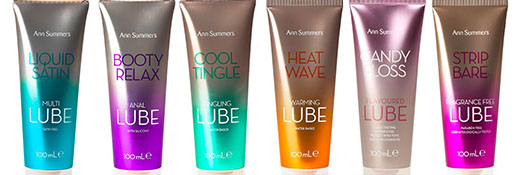
How to Use Lube – A Complete Guide
Find out everything you need to know about when, how and why to use lube and uncover a world of pleasure. Read the Ann Summers lube guide now.
Sign up for Emails
Get 20% off your first order.
Plus the latest launches, offers and exclusives!
*20% Discount only available on full price products and 5% off discounted products.
By inputting your information, you agree that we can use it in accordance with our Privacy Policy. You are able to unsubscribe from marketing at any time. By proceeding you agree to our Terms and Conditions.
You must be over 18 to join our mailing list.

Sign up to emails and get up to 20% off your first order
Stay in the loop with our latest launches, offers and exclusives!
*20% Discount only available on full price products and 5% off discounted products
By inputting your information, you agree that we can use it in accordance with our Privacy Policy. You are able to unsubscribe from marketing at any time. By proceeding you agree to our Terms and Conditions.
You must be over 18 to join our mailing list.
Our Benefits
Free Delivery over £50
Spend £50 or more and enjoy free UK Standard Delivery (arrives in 3 working days).
Prefer something faster or more flexible? Next Day, Click & Collect & more at checkout.
Buy Now, Pay Later
Buy Now & Pay Later with our payment partners Klarna, Paypal, and Clearpay at checkout. Get the product you want, when you want it.
Free Returns
Changed your mind? Return eligible items free of charge within 28 days.
Discreet Delivery
Your order will always arrive in plain, unbranded packaging from “AS Ltd”.
Remove Product?
Are you sure you want to remove:
?